

Table of Contents
- Why Handcrafted Sauces Taste Better Than Mass-Produced
- Using Handcrafted Sauces as a Marinade: Getting More From Every Bottle
- How to Choose the Best Handcrafted Sauce for Your Kitchen
- Frequently Asked Questions
Last Updated: September 11, 2026
Why Handcrafted Sauces Taste Better Than Mass-Produced
Handcrafted sauces taste better because it is built around real ingredients and small-batch cooking. At Waz's Sauce Hut, we make every bottle by hand in a small commercial kitchen, selecting ingredients by hand and cooking them on an induction cooker in small batches.
The difference shows up in layers: fresh apples, real bourbon, golden honey, smoky chipotle and roasted coffee each bring their own depth, and a handcrafted sauce lets those notes come through instead of burying them under flat sweetness.
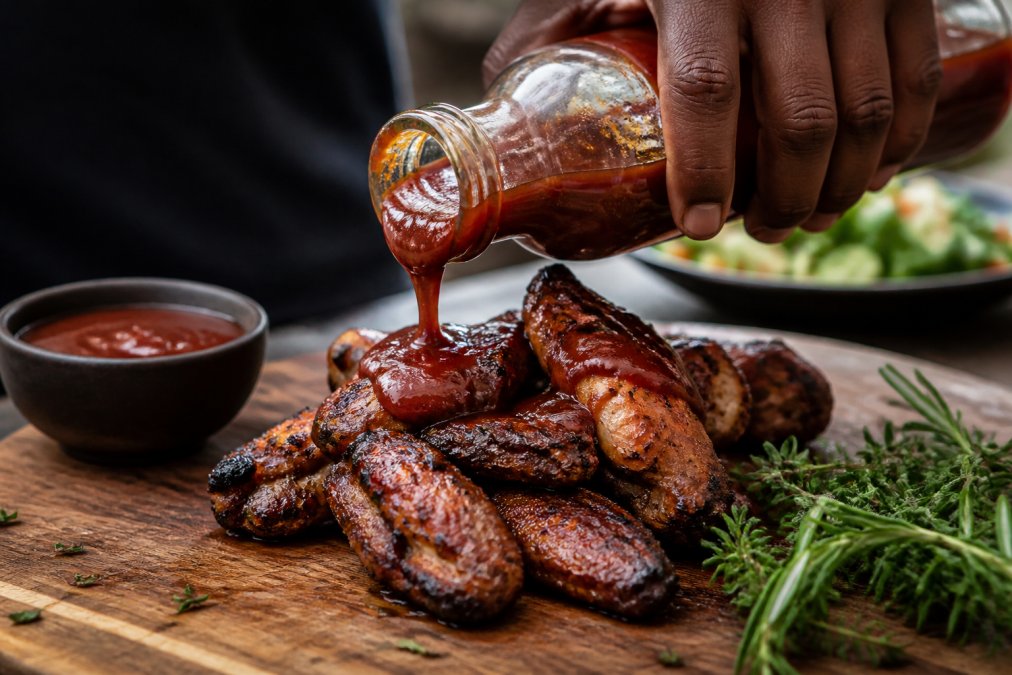
Close-up of a hand pouring rich BBQ sauce from a glass bottle over grilled chicken wings on a rustic wooden board, with fresh herbs and a small bowl of sauce nearby
Using Handcrafted Sauces as a Marinade: Getting More From Every Bottle
Using handcrafted sauces as a marinade is one of the fastest ways to get more from a bottle, because a good sauce can carry sweetness, acidity, smoke and spice into the meat before it hits the heat. For a variety of flavour profiles, select your favourite flavour and coat chicken, ribs, pork and even fish, leave it to sit, then cook as normal.
The same bottle can do three jobs: marinade, glaze and dip. For a smokey, sweet lift, try The Captain, a honey rum chipotle sauce built for ribs and wings, or Gentleman's Choice for fresh apple and real bourbon perfect for pork and lasagne’s.


How to Choose the Best Handcrafted Sauce for Your Kitchen
Choosing the best handcrafted sauce comes down to three things: what is in it, how you will use it, and whether the flavour suits the food you cook. Read the label first: ingredients are listed by weight, so what appears near the front tells you most of what you need to know.
Then match the sauce to the job: a thinner, brighter sauce suits chicken and fish, while a richer, smokier one stands up to beef and pork.
What to Check |
Why It Matters |
What to Look For |
|---|---|---|
Ingredient list |
Shows what carries the flavour |
Named ingredients, not just "flavouring" |
Flavour profile |
Decides what it pairs with |
Smokey, fruity, floral, spicy or coffee-led |
Versatility |
How many jobs one bottle does |
Works as marinade, glaze, dip, condiment, binder or basting |
Our sauces are free from most common allergens, including soya, gluten, nuts, fish and eggs (food.gov.uk). Check the label on each bottle for sulphites, celery, milk and mustard.
If you want to sample the range at once, the Gourmet Starter Kit holds 11 x 100ml jars with 16 recipes, each individual delivers its own depth of flavour.

Gourmet Starter Kit
Frequently Asked Questions
What makes artisanal sauces different from supermarket brands?
Artisanal sauces are made by hand in small batches, with premium fresh ingredients selected by hand, no bulking agents used and cooked on an induction cooker in small batches. This gives the maker control over flavour at every stage, so you get depth and character rather than a uniform taste. The result is a sauce that tastes genuinely different.
Are uniquely flavoured handcrafted sauces better for marinades?
Yes. Uniquely flavoured handcrafted sauces work as marinades as well as glazes, dips or finishing sauces. The flavours are built from real ingredients, making them versatile for longer contact with meat, vegetables and seafood. Try The Captain Honey Rum Chipotle Sauce on ribs or wings, or brush Hawaiian Tropics Hibiscus Sauce over pulled pork or salmon before cooking.
How do I choose the best handcrafted sauce for my cooking?
Start with how you cook. If you grill often, look for a sauce that doubles as a marinade and a finishing glaze. Check the ingredient list: real fruit, spirits, honey or coffee are signs of quality as no bulking agents or artificial flavours have been used. Look for sauces that are free from most common allergens, including soya, gluten, nuts, fish and eggs - check the label on each bottle for sulphites, celery and mustard.